The duty
What this machine does.
A grading step is justified when the incoming fruit varies enough to change peeling performance, recovery or the finished texture. Size grading is the most common requirement; quality grading may be manual or camera-assisted. The objective is not to create perfect fruit but to stop one variable lot from destabilising the whole line.
Working arrangement
How it is built.
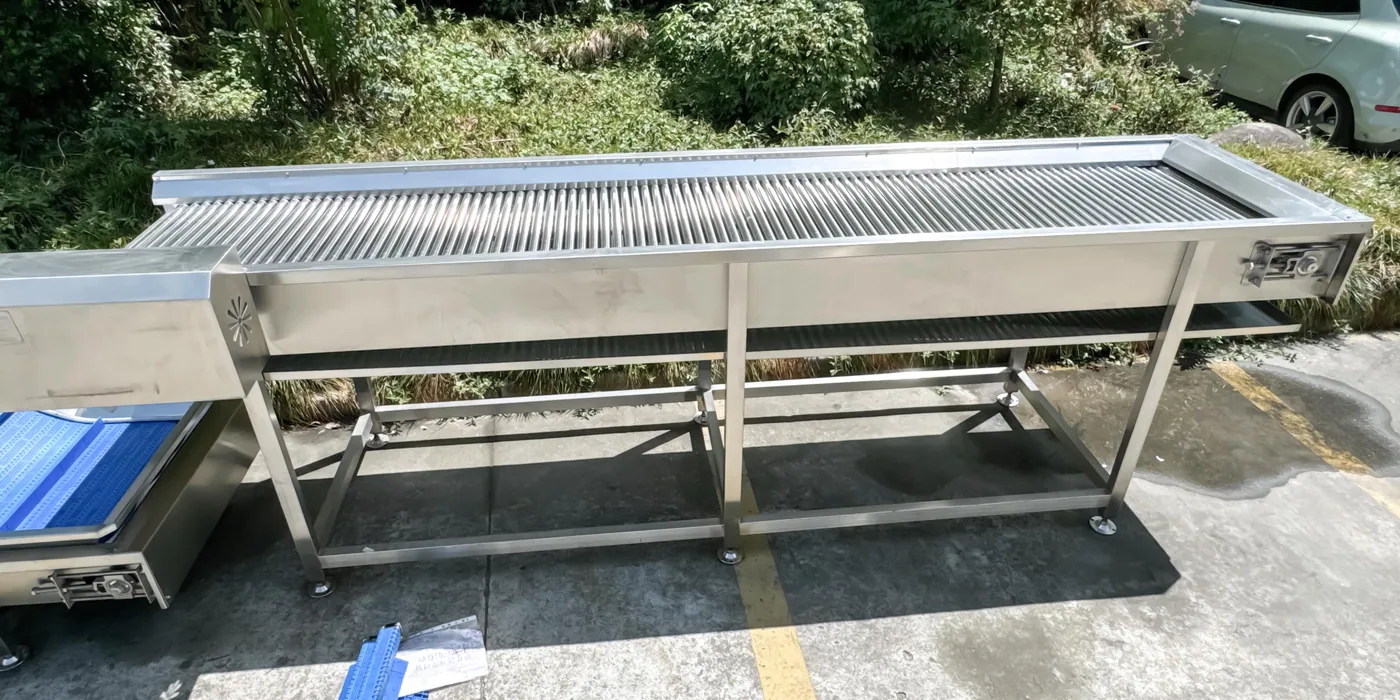
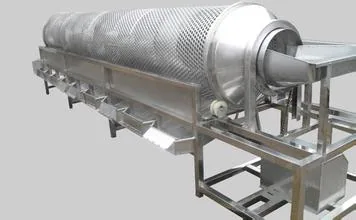
A roller or belt grader with adjustable gaps, lanes and discharge chutes, or a manual grading table with defined lanes. Camera or weight-based systems can be considered where the product value and traceability justify them. Bypass and reject routes must be designed together with the good-product route.
Operating sequence
- 01
Fruit is singulated or spread across the grading lane.
- 02
Size or quality bands are separated by gaps, weight or vision.
- 03
Each band discharges to a defined route or holding point.
- 04
Rejects and out-of-window fruit leave the good-product path.
Selection essentials
Choose it for the actual duty.
- Actual size distribution across representative deliveries
- Whether ripeness or internal quality also needs a separate band
- Peeling machine feed window and changeover between bands
- Traceability of each band and the route for rejected fruit
- Floor space and access around every discharge lane
Specification
What the quotation must state.
| Model | Project-configured; no fixed catalogue model is published |
|---|---|
| Planning band | 1–5 t/h whole-fruit feed, depending on lanes and fruit size |
| Grading basis | Size, weight or visual quality, selected for the actual variability |
| Construction | Stainless-steel frame and food-grade contact surfaces |
| Bands | Typically 2–4, set by the peeling machine and product plan |
| Options | Variable-speed drives, lane diverters, reject collection, data capture |
Capacity bands are for project planning. Final model, motor rating, dimensions, utilities and acceptance conditions are confirmed on the approved quotation and drawings. No catalogue model is implied where none is published.
Cleaning
Cleaning & maintenance.
Clean gaps, rollers, lanes and diverters where fruit and debris collect. Confirm that cleaning does not change the calibrated grading gaps. Record the setting for each product or band.
Interfaces
Upstream & downstream.
Upstream inspection; downstream peeling feed, ripening room or reject bin; controls and traceability records.
Technical FAQ
Questions buyers ask.
Is size grading necessary for avocado puree?
It is useful when fruit size varies enough to affect peeling, pitting or feed stability. If the peeler can accept the full size range with good recovery, a separate grader may not be justified. The decision should come from a trial, not a default line layout.
Can the same grader handle different cultivars?
It can if the gaps, lanes and speed are adjustable and the settings are recorded. Shape and size distribution differ by cultivar, so changeover should include a verification run with the new fruit.
Put it in context