The duty
What this machine does.
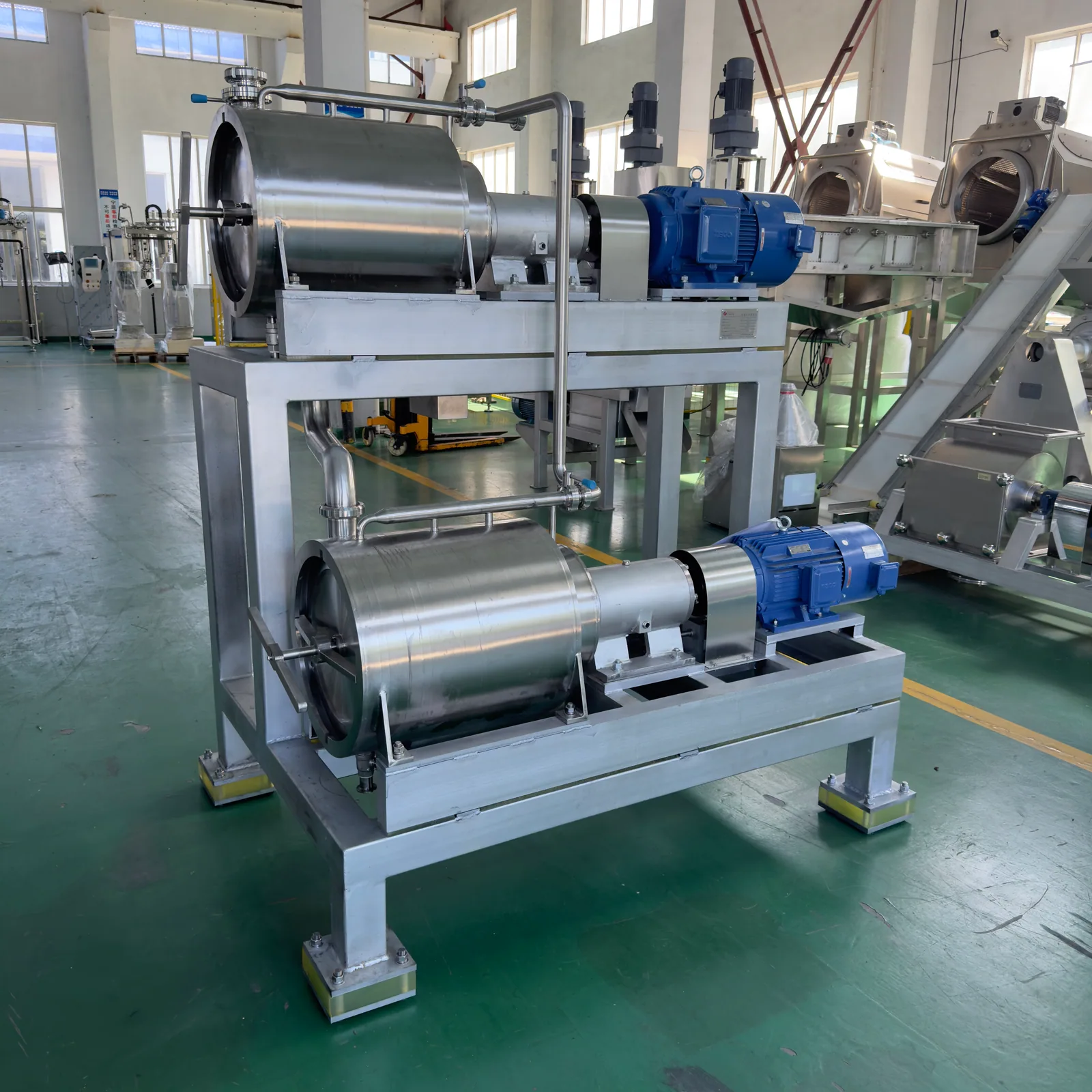
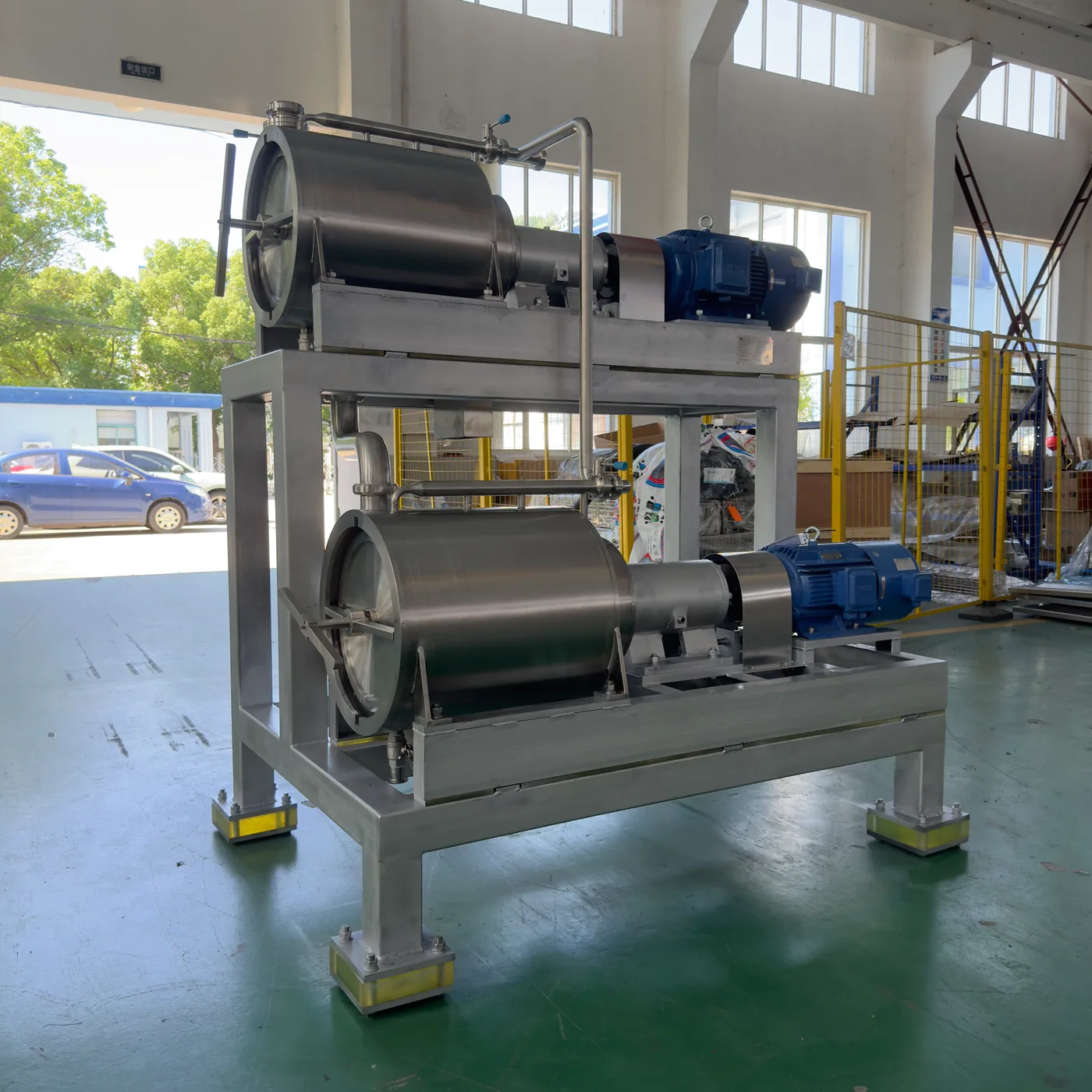
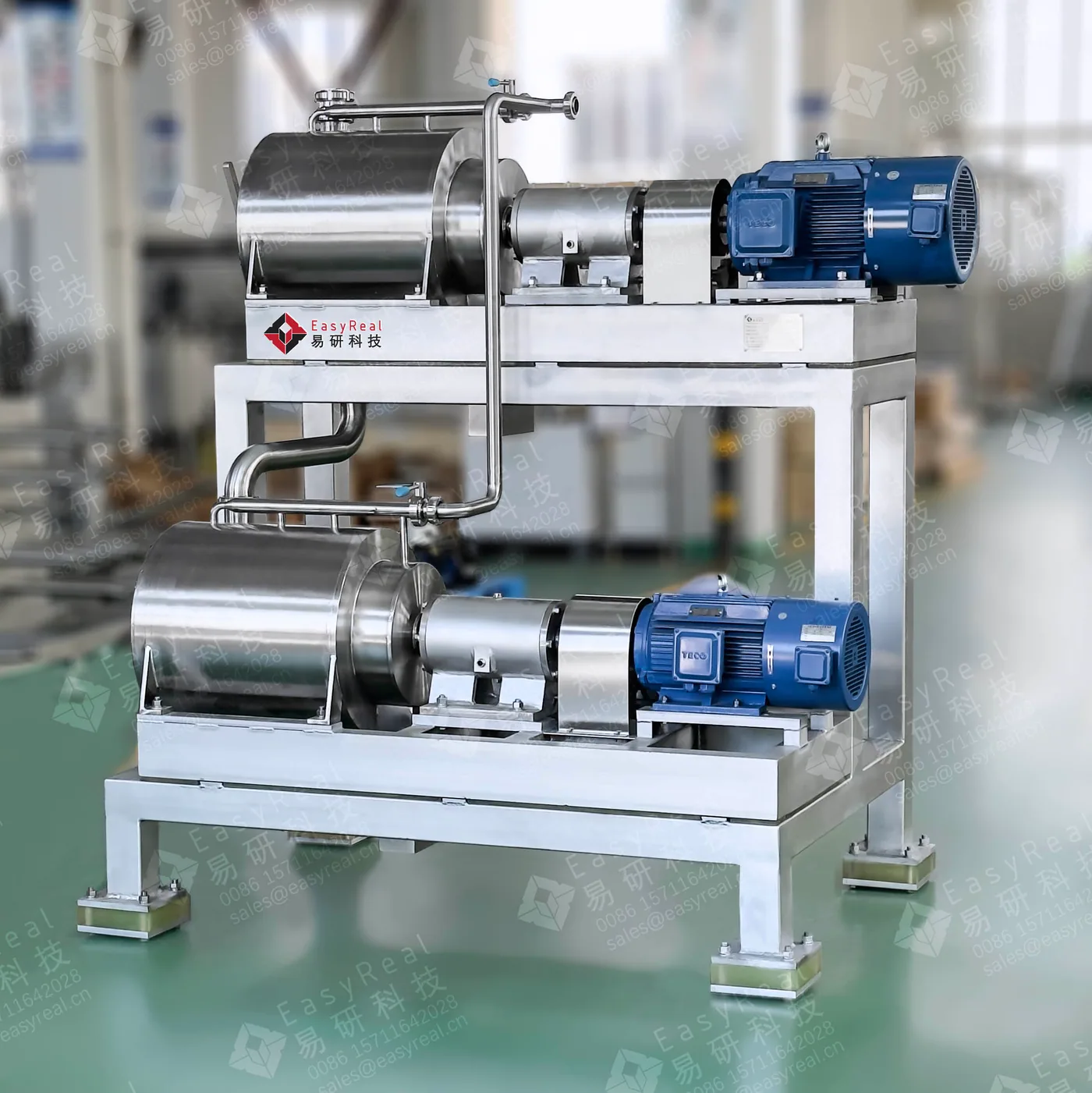
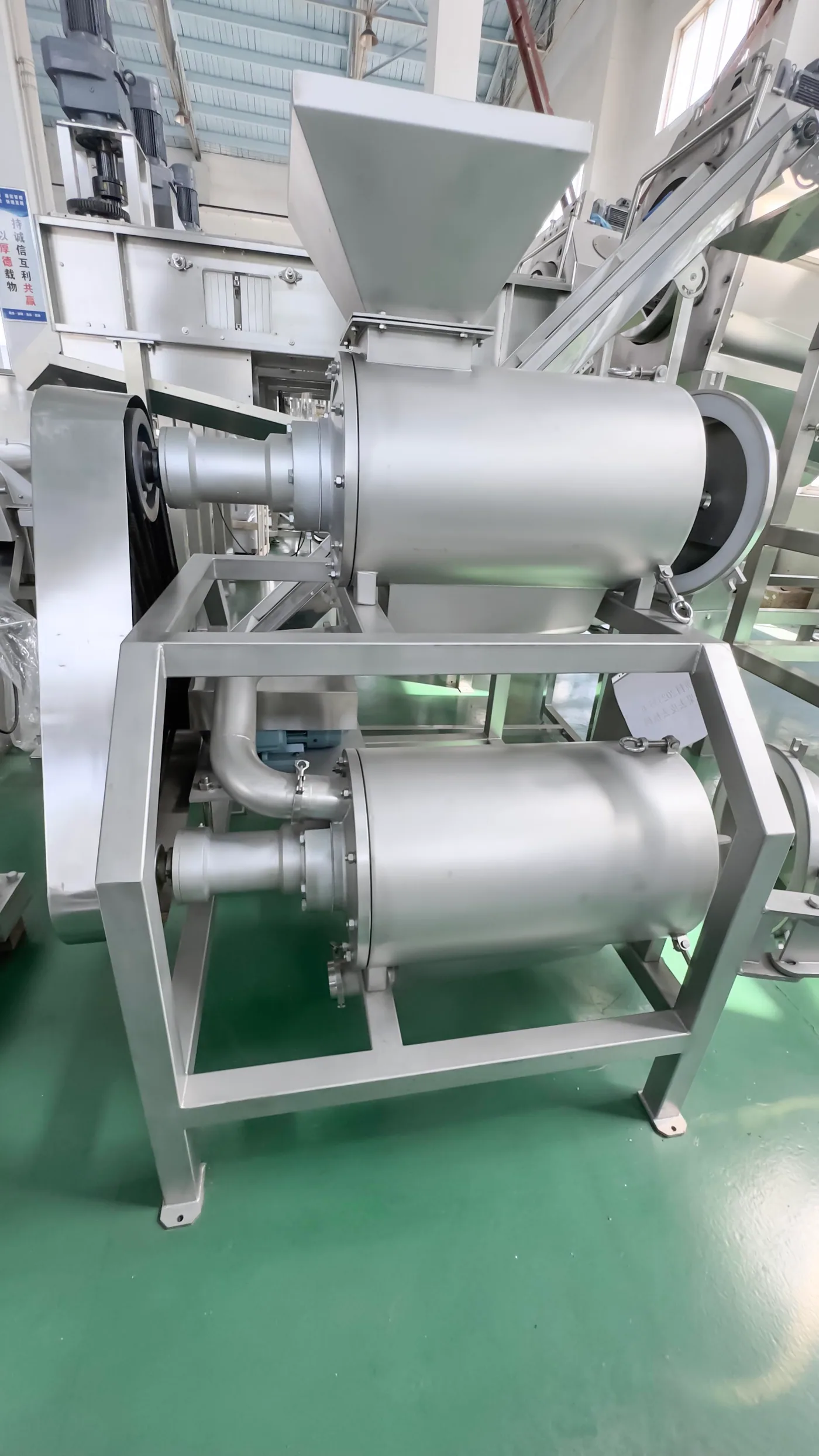
Pulp extraction turns prepared fruit into a pumpable flesh stream. The machine may combine crushing, pulping and coarse separation, or it may be a single stage ahead of a separate finisher. The important decisions are the working clearance, screen or orifice, product temperature and the point at which peel, stone fragments and rejected tissue leave the food path. Throughput alone does not describe the duty.
Working arrangement
How it is built.
A stainless hopper, feed screw or gravity feed, working chamber and screen or separation arrangement, driven by a motor sized for the loaded start and viscous product. The discharge should connect directly to the next stage with a short, cleanable path. Screen access and rotor inspection are part of the hygiene design.
Operating sequence
- 01
Prepared fruit enters the working chamber at a steady rate.
- 02
Rotors or screws move the flesh against a screen or separation arrangement.
- 03
Coarse pulp leaves through the selected opening; solids are rejected.
- 04
The pulp transfers directly to finishing, cutting or a covered holding step.
Selection essentials
Choose it for the actual duty.
- Fruit condition and the maximum acceptable stone or skin fragment
- Target texture before finishing, and whether coarse pulp is the saleable product
- Screen or clearance changeover between recipes
- Temperature rise and air pickup during working
- Cleaning access to the chamber, rotor and discharge
Specification
What the quotation must state.
| Model | Project-configured; no fixed catalogue model is published |
|---|---|
| Planning band | 0.5–3 t/h prepared-flesh feed, depending on fruit and working arrangement |
| Working principle | Crushing and pulping with coarse separation; finishing may be a separate stage |
| Construction | Stainless-steel product-contact parts; grade confirmed in the quotation |
| Screen / clearance | Selected for the target texture and acceptable fibre; trial required |
| Options | Variable-speed drive, temperature sensor, direct transfer pump, reject collection |
Capacity bands are for project planning. Final model, motor rating, dimensions, utilities and acceptance conditions are confirmed on the approved quotation and drawings. No catalogue model is implied where none is published.
Cleaning
Cleaning & maintenance.
Open the working chamber and screen; remove fibrous and oily residue from the rotor, discharge and seals. Confirm that cleaning does not damage the screen or change the working clearance. Inspect for trapped product before reassembly.
Interfaces
Upstream & downstream.
Upstream peeling and inspection; downstream finisher, cutter or mixer; transfer pump and waste collection.
Technical FAQ
Questions buyers ask.
What is the difference between pulping and finishing?
Pulping recovers the flesh and creates a coarse product; finishing reduces fibre and particle size to meet a smoother specification. A chunky product may bypass fine finishing. The two operations can be combined in one machine or separated, depending on the texture target and cleaning needs.
How is avocado pulp extraction capacity stated?
State the measurement point: prepared-flesh feed, coarse pulp output or finished puree. The rates differ because of recovery, added ingredients and downstream losses. A quotation that gives only one number without a boundary is difficult to compare.
Can the machine handle fruit with skin remaining?
It should not be used to hide poor peeling. Residual skin can wrap around working parts, increase fibre and carry undesirable flavour. The preparation step should deliver flesh within an agreed skin-carryover limit before pulping.
Put it in context