The duty
What this machine does.
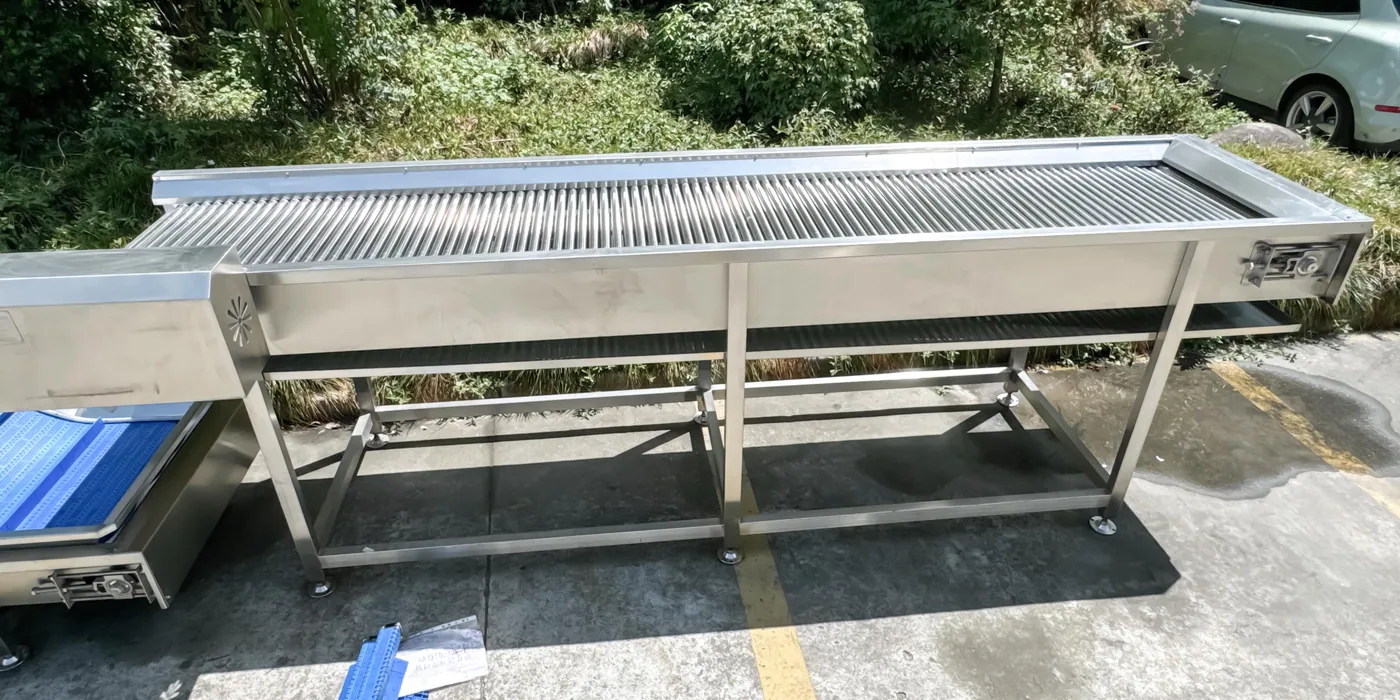
The inspection conveyor is the first controlled decision point in an avocado line. It should let operators see the fruit, remove damaged or unsuitable units and keep rejects away from the prepared-product path. It is also where lot identity begins: cultivar, supplier, arrival date and ripeness assessment should stay linked to the batch that continues into the process.
Working arrangement
How it is built.
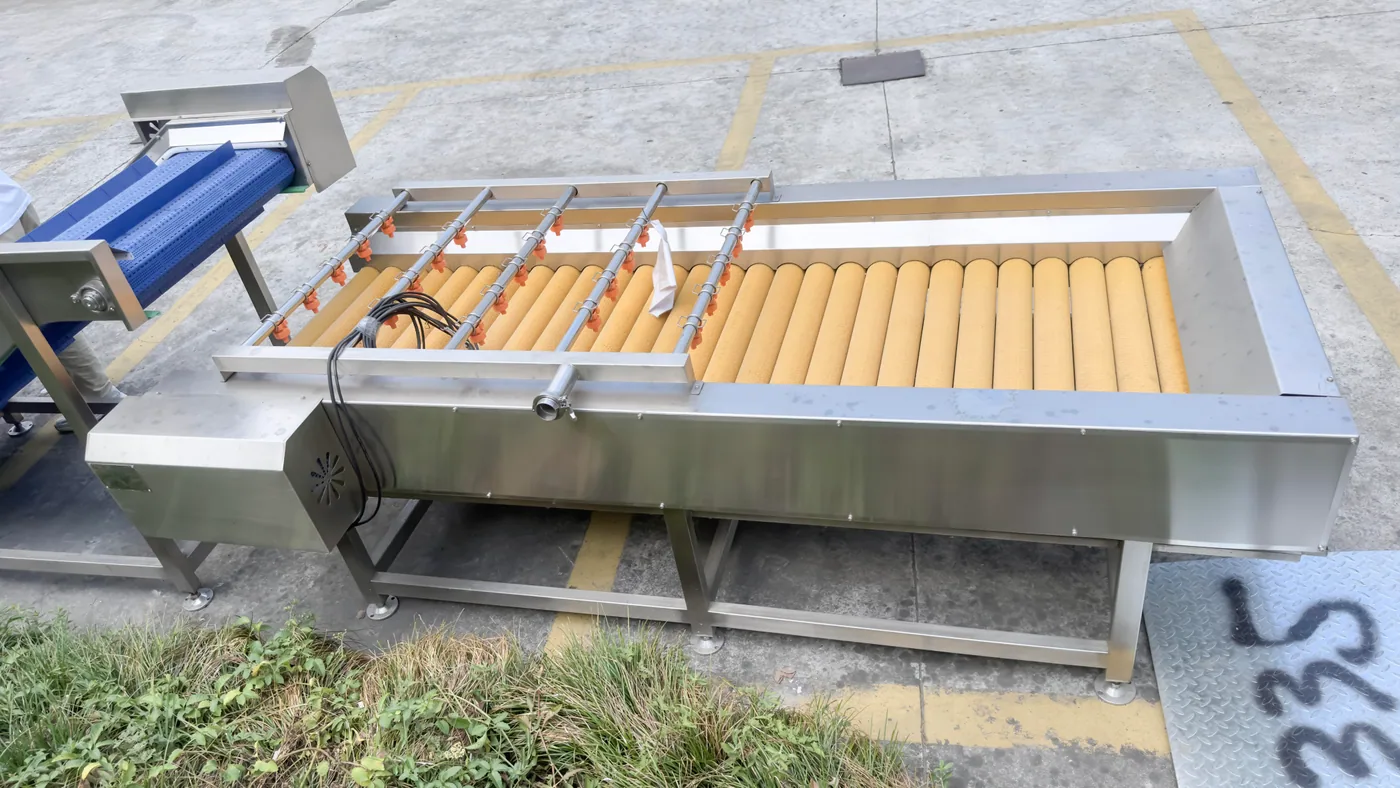
A stainless roller or belt inspection table with adjustable guide rails, collection trays and a working height that supports sustained inspection. Roll spacing and belt width are selected for the fruit size range and the hourly inspection rate. Lighting, mirror access and a defined reject route matter as much as the conveyor frame.
Operating sequence
- 01
Lots are identified and presented at a controlled rate.
- 02
Operators inspect the fruit under even lighting.
- 03
Damaged or out-of-window fruit is diverted to a separate reject route.
- 04
Accepted fruit transfers to washing, grading or an approved ripening plan.
Selection essentials
Choose it for the actual duty.
- Fruit size distribution and the roll spacing needed to rotate rather than drop fruit
- Hourly inspection rate with the actual number of inspectors
- Lighting, viewing angle and access to every part of the belt
- Separate reject collection that does not cross the washed or peeled product path
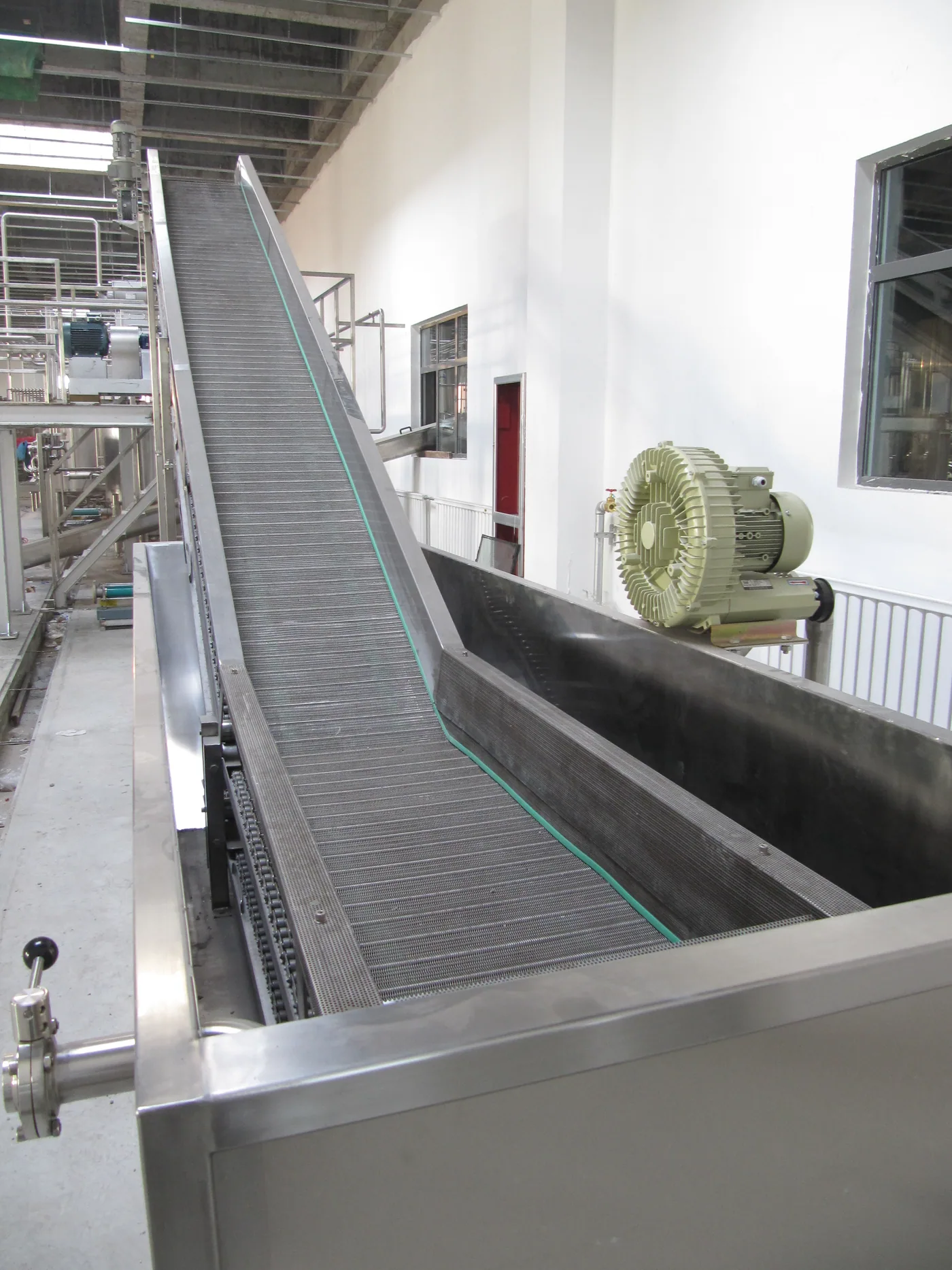
- Interface height with the washer, elevator or grading machine
Specification
What the quotation must state.
| Model | Project-configured; no fixed catalogue model is published |
|---|---|
| Planning band | 1–5 t/h whole-fruit presentation, depending on belt width and inspection staffing |
| Construction | Stainless-steel frame and product-contact surfaces; grade confirmed in the quotation |
| Conveyor type | Roller bed or food-grade belt, selected for fruit size and handling sensitivity |
| Working height | Set to the inspection team and upstream delivery method |
| Options | Variable-speed drive, reject chutes, wash-down edges, lighting, lot signage |
Capacity bands are for project planning. Final model, motor rating, dimensions, utilities and acceptance conditions are confirmed on the approved quotation and drawings. No catalogue model is implied where none is published.
Cleaning
Cleaning & maintenance.
Remove leaves, labels and trapped fruit before washing down. Inspect rollers, bearings, guards and reject trays for product traps. Confirm that water from the dirty side cannot drain toward prepared flesh.
Interfaces
Upstream & downstream.
Upstream crate tipper or manual feed; downstream washer, elevator or grader; floor drainage and reject collection.
Technical FAQ
Questions buyers ask.
Should inspection happen before or after washing?
Dry inspection before washing removes damaged fruit and gross soil without spreading contamination. A second inspection point after peeling or flesh recovery is normal because internal defects only become visible once the fruit is opened.
How wide should the inspection belt be?
Width follows the fruit size, the number of inspectors and the required hourly rate. A wide belt with too few inspectors simply moves fruit past unexamined. The working reach and reject access set the practical limit.
Can the conveyor feed a bubble washer directly?
Yes, if the discharge height and transfer drop are controlled. Ripe avocados bruise easily, so the transfer should avoid free-fall and hard edges. The washer inlet and water level also need to accept the fruit without blocking.
Put it in context