The duty
What this machine does.
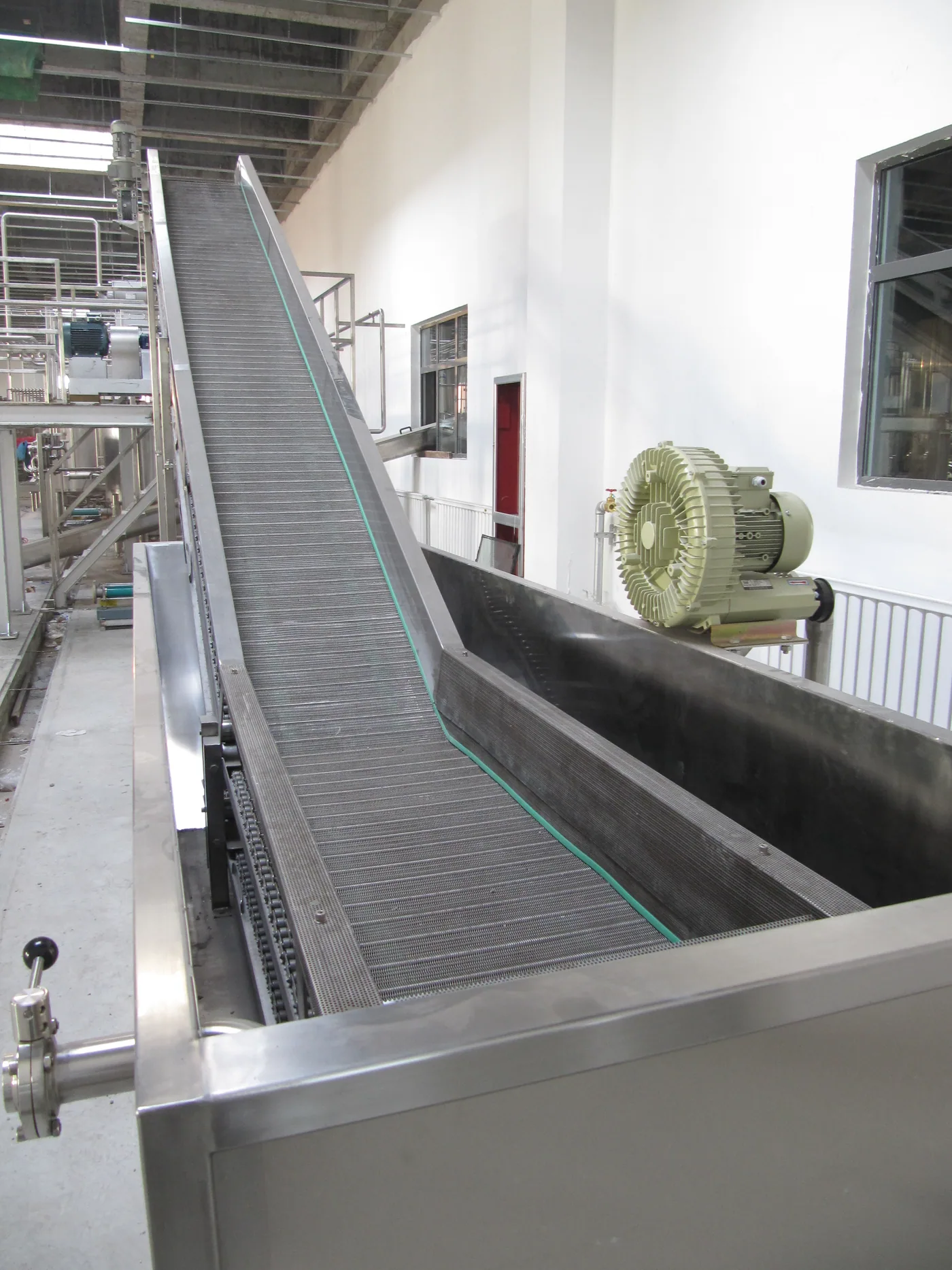
Elevators are easy to treat as a utility, but every transfer is a chance to bruise fruit or create a blockage. The belt type, cleat height, side walls, discharge and speed should be selected with the fruit size and the upstream and downstream equipment. A gentle incline and a controlled discharge are more useful than a high nominal capacity.
Working arrangement
How it is built.
An inclined food-grade belt or flighted conveyor with side containment, a drive selected for the loaded start condition and an adjustable discharge. The inlet should be flooded or fed positively rather than relying on fruit bouncing onto the belt.
Operating sequence
- 01
Fruit is presented positively at the inlet.
- 02
Cleats or belt friction carry it up the incline without roll-back.
- 03
Side walls keep fruit on the belt through the transfer.
- 04
The discharge chute delivers fruit at the next machine's inlet height.
Selection essentials
Choose it for the actual duty.
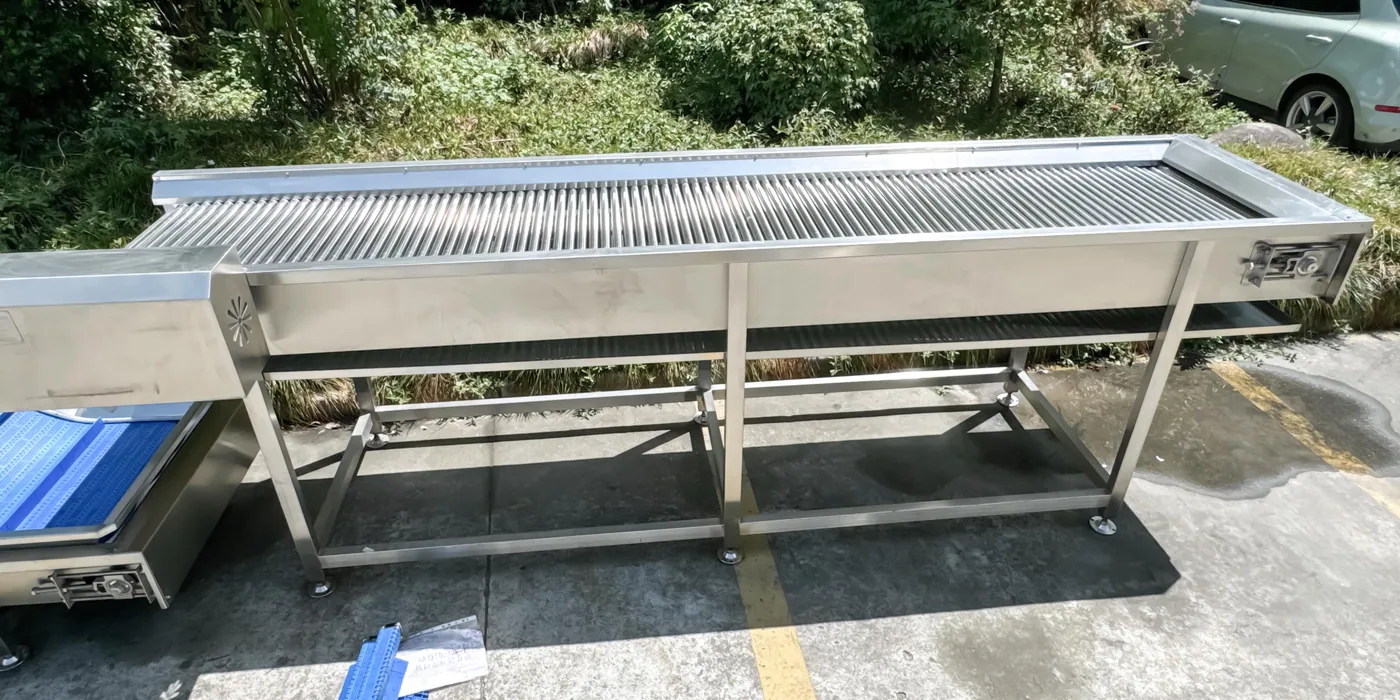
- Vertical lift and horizontal run available in the layout
- Fruit roll-back and the cleat pattern needed at the chosen incline
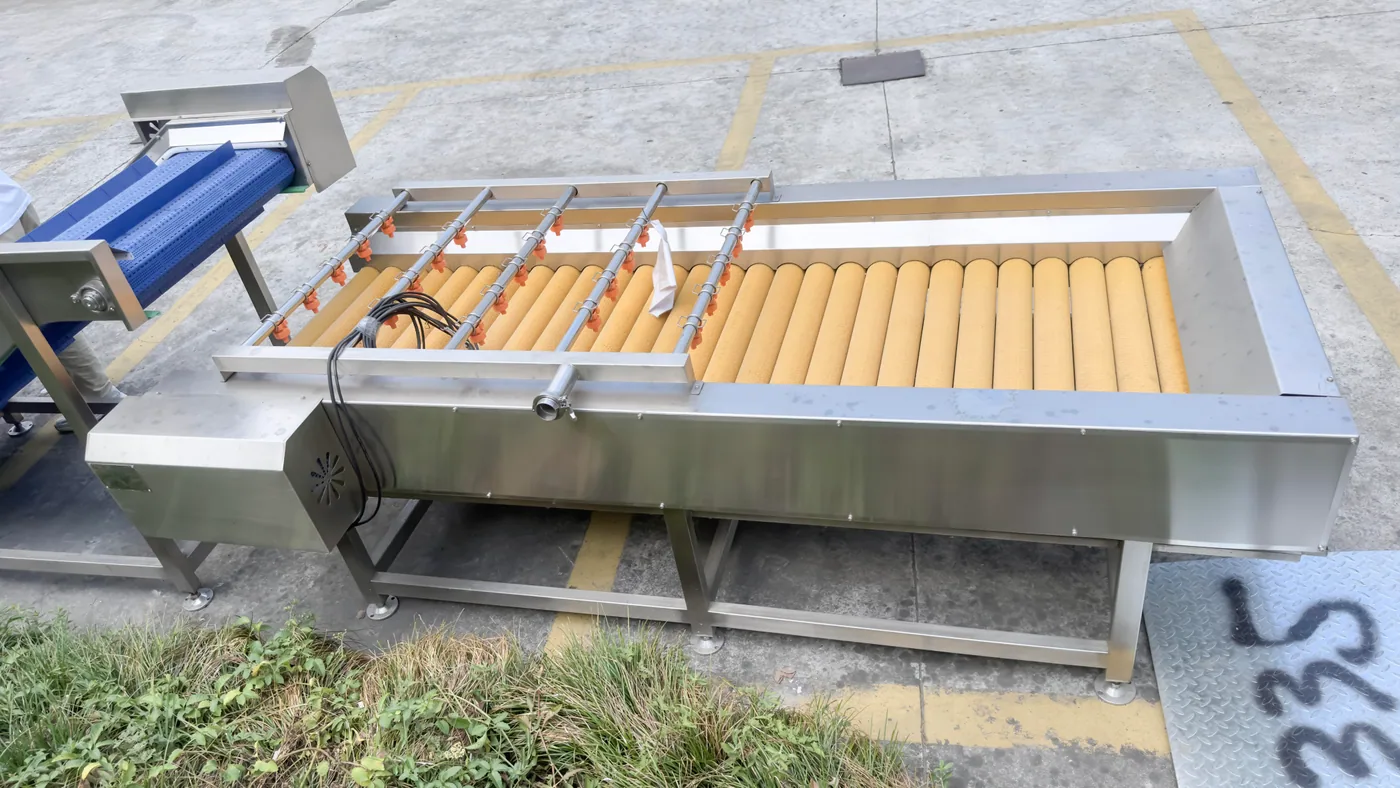
- Wet, slippery fruit and the belt surface
- Inlet presentation and discharge drop
- Access for cleaning under the belt and around the drive
Specification
What the quotation must state.
| Model | Project-configured to the line layout |
|---|---|
| Planning band | 1–5 t/h, depending on belt width, incline and fruit size |
| Belt | Food-grade PVC or modular belt with cleats, selected for wet fruit |
| Construction | Stainless-steel frame and side walls; grade confirmed in the quotation |
| Discharge | Adjustable transition chute or direct feed to the next machine |
| Options | Variable-speed drive, wash-down motor, drip tray, emergency stop |
Capacity bands are for project planning. Final model, motor rating, dimensions, utilities and acceptance conditions are confirmed on the approved quotation and drawings. No catalogue model is implied where none is published.
Cleaning
Cleaning & maintenance.
Provide access to the belt return, cleats, side walls and drip tray. Wet fruit leaves a film that can trap debris. Confirm that wash water drains away from the product path and that the drive is protected.
Interfaces
Upstream & downstream.
Upstream washer or inspection table; downstream peeling feed or grading; electrical supply and control interlock.
Technical FAQ
Questions buyers ask.
Can one elevator feed several machines?
It can, with a diverter or a distribution conveyor, but the control logic and product routing must be clear. A diverter adds another transfer point and another cleaning area. Confirm the actual production sequence before choosing it.
What incline is suitable for avocados?
The practical incline depends on belt friction, cleat height and fruit shape. It should be tested with the actual fruit; a steeper belt may need more containment and a slower speed. The design should prevent fruit from rolling back onto the inlet.
Put it in context